 Kosisochukwu Okalla
 Wazz
Wazz 0xNoWater.eth
 jesse.base.eth
 Anthropic
 Base
Base Monad
MonadProfile· Neutral@DaUnknown_ethOn Ethos
DaUnknown
3 reviews, 33% of them positive.33% positive · 3 reviews· Influence factor 1, above 0% of accountsThe record
From 3 activities · Jun 2026Known for generating lengthy AI-written reviews on daily bounties with minimal research, though valued by some as a knowledgeable web3 educator and mentor.
What people say
Received · 3Given · 72“The Industry's Most Powerful Voice, Sometimes His Own Worst PR Team”Brian Armstrong has done more for mainstream crypto adoption than almost anyone alive. He built Coinbase into the industry's dominant onramp, fought through years of regulatory pressure, and spent significant time and money pushing for crypto-friendly policy in Washington. When institutions wanted a trusted entry point into crypto, Coinbase was usually the answer. The criticism isn't about what he's built. It's about how he uses the influence that comes with it. Over the past year, Armstrong has increasingly blurred the line between industry leader and internet personality. The prediction market controversy, sports betting-style promotions, and last-minute policy interventions created the impression of a CEO who occasionally prioritizes engagement over optics. None were catastrophic mistakes individually, but together they raised questions about judgment. To his credit, Armstrong has consistently been willing to take public positions rather than hide behind corporate messaging. The downside is that every joke, tweet, or off-the-cuff comment carries far more weight when you're effectively the face of the industry. That's the challenge. Brian Armstrong isn't just another crypto founder anymore. He's one of the few executives whose actions influence markets, regulation, and public perception simultaneously. Bottom line: Armstrong's legacy is already secure. He helped bring crypto into the mainstream and survived battles that would have broken most companies. But the bigger Coinbase becomes, the less room there is for casual controversies. The builder is world-class. The public messaging can still be surprisingly reckless. on Brian Armstrong · 2285· 4mo ago0
on Brian Armstrong · 2285· 4mo ago0“Convenient Until It Wasn't”Bankrbot solves a real problem: letting users trade, swap, and interact with crypto through simple natural language commands on X. The UX is genuinely impressive and far easier than juggling wallets, bridges, and DEX interfaces. The problem is that convenience became the attack surface. In 2026, Bankr suffered two major security incidents within weeks. The first saw attackers manipulate AI-generated outputs into executing unauthorized transactions. The second involved compromised user wallets and forced the platform into emergency response mode. To their credit, Bankr communicated openly, patched vulnerabilities quickly, and reimbursed affected users. But the bigger issue remains trust. Both incidents exposed the risks of connecting AI agents directly to financial actions. When a chatbot can move money, mistakes become far more expensive. Bottom line: Bankr's vision is compelling and the team handled the crises better than most crypto projects would have. But getting hacked twice in such a short timeframe makes it difficult to treat the platform as mature infrastructure. Great UX, questionable risk profile. Use accordingly. on bankrbot · 1564· 4mo ago · neutral0
on bankrbot · 1564· 4mo ago · neutral0“The Extraction Artist; Sharp Eyes, Sharper Exit Timing”Him Gajria is one of those accounts that perfectly captures the best and worst parts of Crypto Twitter. Even many of his critics will admit the same thing: he's good. Good at spotting narratives. Good at identifying emerging metas. Good at recognizing where attention is flowing before most people realize there's even a trend forming. Whether it was AI tokens, Solana memecoins, or whatever the latest speculative wave happened to be, his reputation was built on being early more often than most. That's not where the controversy comes from. The controversy comes from what happens after. Spend enough time reading community discussions about him and you'll notice the same criticism appearing over and over again. Supporters see an elite trend spotter. Critics see someone who understands attention well enough to monetize it. The disagreement isn't usually about whether he found the opportunity first. It's about whether followers benefit from that information or simply arrive after the most profitable part of the trade is already over. That's an important distinction. In crypto, being right and being useful are not always the same thing. Many traders are capable of identifying opportunities early. Far fewer are willing to publicly document the full lifecycle of those trades, including exits, mistakes, and positions that never worked out. That's where much of the skepticism surrounding Him originates. Critics argue that the timeline often highlights the discovery phase of a narrative far more than the distribution phase. Whether that's fair or not, the perception has become part of the brand. What's interesting is that his reputation wasn't built through random shilling. It was built because people genuinely believed he had an edge. In many ways, that's why the criticism became so intense. Nobody cares when a random influencer makes bad calls. They care when someone widely viewed as smart is accused of using that credibility in ways that primarily benefit themselves. The reality is probably simpler than both sides want to admit. Him is undeniably good at identifying emerging trends. He's also operating in one of the most aggressively competitive environments in crypto, where information itself becomes an asset and attention becomes liquidity. That's why following him requires a different mindset than following most accounts. Don't treat the tweet as the trade. Treat the tweet as a signal that a trade may already be underway. Because whether you view him as a top-tier trend hunter or a master extractor usually depends on one thing: Whether you arrived before him—or after him. on him · 1251· 4mo ago · negative0
on him · 1251· 4mo ago · negative0“The OG That Survived Its Own Mistakes”Azuki is one of the few NFT projects that earned the right to be called a cultural brand instead of just a collection. When it launched in early 2022, it didn't simply ride the NFT wave. It brought something distinct to it. The blend of anime aesthetics, streetwear influences, and internet-native culture gave Azuki an identity that felt authentic rather than manufactured. While much of the NFT space was chasing trends, Azuki created one. That's why people cared so much when things started going wrong. The Elementals launch remains the defining controversy in Azuki's history. Financially, it was a massive success. Community-wise, it became one of the most expensive trust withdrawals in NFT history. Holders felt the collection was too visually similar to the originals, too large, and too rushed. The criticism wasn't really about the artwork. It was about dilution. NFT communities are built on a fragile social contract. People buy into scarcity, status, and identity as much as the art itself. When holders felt that contract had been weakened, the backlash was immediate. To Chiru Labs' credit, they acknowledged the mistakes publicly. The problem was that every attempted solution created a new argument. That's been the recurring theme with Azuki. The team often recognizes problems. The challenge is that the fixes don't always land cleanly. Early criticism around utility followed a similar pattern. While competitors were promising metaverses, games, and impossible roadmaps, Azuki focused heavily on brand-building. In hindsight that approach looks more sustainable than many of the promises made during the NFT boom. But for holders living through the market downturn, patience wasn't always easy. Founder optics added another layer of friction. Several public communications landed poorly, particularly at moments when portions of the community were already frustrated. In crypto, timing matters. A message that sounds inspirational during a bull market can sound disconnected during a drawdown. What's remarkable is that none of those controversies killed the brand. Most NFT projects never recover from a major trust event. Azuki recovered from several. Part of that resilience comes from the fact that the team never stopped building. Anime.com, the ANIME token, partnerships, events, merchandise, and continued expansion into broader anime culture gave the ecosystem something larger than floor price speculation. Whether every initiative succeeds is almost secondary to the fact that there is still a long-term vision being pursued. That's ultimately what separates Azuki from most NFT projects of its generation. The collection made mistakes. The founders made mistakes. The execution often fell short of expectations. Yet the community remained. Azuki's greatest achievement isn't that it avoided failure. It's that it survived failure. In NFTs, that's often the harder thing to do. on Azuki · 1742· 4mo ago0
on Azuki · 1742· 4mo ago0“Pokémon Cards on Solana, Real Revenue, Real Risk, Real Regulatory Target”Collector Crypt is one of the few crypto projects this cycle that managed to do something surprisingly difficult: convince people to spend money on a product rather than a narrative. While most of the industry spent years chasing points programs, token incentives, and speculative farming loops, Collector Crypt built something much simpler. People buy packs, open them, collect cards, and enjoy the experience. It sounds almost trivial until you look at the numbers. The revenue, transaction volume, and user engagement suggest this isn't another protocol manufacturing activity through incentives. Users are participating because they actually like the product. That's a rare achievement in crypto. The physical infrastructure adds another layer of credibility. Secure storage facilities, real inventory, and a tangible connection between digital ownership and physical collectibles help solve one of the biggest problems facing tokenized asset projects: trust. Most "real-world asset" projects ask users to believe something exists somewhere. Collector Crypt at least makes a visible effort to prove it. The problem is that product-market fit doesn't eliminate regulatory risk. In some ways, it increases it. The platform's success is built around randomized pack mechanics, and that's where the uncomfortable questions begin. The same feature that makes the experience engaging is also the feature most likely to attract scrutiny. When users spend money for a chance at receiving something valuable, regulators start asking whether they're looking at collectibles, gaming, gambling, securities, or some combination of all three. The fact that major jurisdictions have already been restricted tells you the team understands that risk. That's not necessarily a red flag. It's a recognition that the legal questions remain unresolved. The token structure raises separate concerns. Treasury-backed narratives are popular in crypto because they create the impression of underlying value, but investors should always distinguish between assets existing in a treasury and assets providing enforceable claims to token holders. Those are very different things. Likewise, heavily insider-weighted allocations don't automatically doom a project, but they do create incentive structures that deserve scrutiny. What's interesting is that none of these concerns change the fundamental reality of the business. People clearly want the product. The platform clearly generates revenue. The team clearly found something that works. That's why the regulatory questions matter so much. Nobody cares when a struggling project faces legal uncertainty. They care when a successful one does. Collector Crypt feels less like a crypto experiment and more like a real consumer business that happens to live onchain. That's a compliment. It's also exactly why regulators may eventually take a closer look. The product has already proven itself. Now it has to prove it can survive success. on Collector Crypt · 1553· 4mo ago · neutral0
on Collector Crypt · 1553· 4mo ago · neutral0“Top 3 on Solana by Revenue. Now Fighting Its Own Investors”ZINC is one of the few protocols this cycle that forced people to stop talking about narratives and start talking about numbers. Most new DeFi launches spend months farming attention before proving anyone actually wants the product. ZINC did the opposite. Capital arrived quickly, fees followed, and within weeks the protocol was generating the kind of revenue that normally takes projects years to reach. In a market flooded with points programs and speculative promises, real cash flow stands out. That's why so many people started paying attention. The protocol's architecture deserves credit too. Leveraging Arcium's confidential compute infrastructure gives ZINC something most DeFi protocols lack: genuine privacy at the execution layer. It's not just another yield product with a different front-end. There is actual technical differentiation underneath the hood. The problem is that success created a new question. Who is the protocol ultimately being built for? The ongoing dispute surrounding MetaDAO and the proposed buyout of governance participants has become the first real test of that question. Critics see the proposal as a team attempting to regain control just as the protocol's economics are proving themselves. Supporters argue it's a practical restructuring designed to simplify governance and remove inefficiencies that come with decentralized administration. Both sides claim they're protecting the future of the protocol. Only one side controls the proposal. That's why the optics have become difficult. Crypto projects often market decentralization aggressively when they're raising attention, distributing ownership, or building communities. The real test comes later, when governance becomes inconvenient, slows decision-making, or creates competing stakeholder interests. That's the moment where teams reveal whether decentralization was a principle or a strategy. ZINC is now approaching that moment. The vesting structure adds another layer of scrutiny. Price-based unlocks create a dynamic where token appreciation becomes directly linked to insider liquidity events. That's not automatically a flaw, but it does create incentives that investors should understand clearly. Markets work best when incentives are transparent. What's important is that none of these concerns erase the protocol's achievements. The revenue is real. The product is real. The demand appears real. That's exactly why the governance debate matters so much. If ZINC were another struggling protocol with no users, nobody would care. The controversy exists because the project has already proven it can create value. Now the community wants to know how that value will be controlled, distributed, and governed going forward. The technology got ZINC attention. The MetaDAO dispute will determine what kind of reputation it earns. Because generating revenue is impressive. Proving that success won't come at the expense of the people who helped create it is much harder. on ZINC · 1331· 4mo ago · neutral0
on ZINC · 1331· 4mo ago · neutral0“The Rare CT Voice Who Earned the Right to Be Heard”Cobie occupies a position on Crypto Twitter that almost nobody else has managed to achieve. In an industry built on incentives, hidden agendas, paid promotions, and shifting loyalties, he's one of the few large accounts that people generally assume is speaking honestly until proven otherwise. That reputation wasn't built overnight. For years, Cobie built an audience by doing something surprisingly uncommon: treating crypto like an industry worth thinking about rather than a casino worth promoting. Whether through UpOnly, long-form writing, or his posts on CT, he developed a style that blends humor, skepticism, and genuine curiosity. The jokes get shared, but it's usually the underlying analysis that keeps people paying attention. What separates Cobie from many influencers is that his credibility doesn't depend on constantly being right. It depends on people believing he's acting in good faith. The Echo acquisition reinforced that perception. Crypto is full of commentators who talk endlessly about building products. Cobie actually built one. Selling Echo to Coinbase transformed him from a respected commentator into someone who had successfully created and exited a company that solved a real problem for the industry. That matters because it changes how people interpret his opinions. He's no longer just discussing the ecosystem from the sidelines. He's participated in building it. The FTX collapse was another moment that strengthened his reputation rather than weakened it. Like many people in the industry, he had exposure. Unlike many people in the industry, he didn't rewrite history afterward. He acknowledged his mistakes, admitted losses, and resisted the temptation to pretend he had secretly seen everything coming. In crypto, honesty after being wrong is often more impressive than being right in the first place. That doesn't mean he's free from conflicts. The reality is that someone as connected as Cobie inevitably develops relationships, investments, and interests across the ecosystem. Echo's involvement with numerous projects before the acquisition means there are legitimate questions about overlap between commentary and exposure. The difference is that people generally worry less about those conflicts because Cobie has spent years building trust rather than spending trust. That's a distinction most influencers never understand. The reason Cobie remains influential isn't because he posts the best charts, predicts every cycle, or discovers every winner. It's because people believe he values credibility more than short-term engagement. In a market where attention is often monetized as aggressively as possible, that alone makes him unusual. Crypto has plenty of analysts. Crypto has plenty of entertainers. Crypto has plenty of builders. Very few people manage to be all three at the same time. That's why when Cobie talks, people still listen.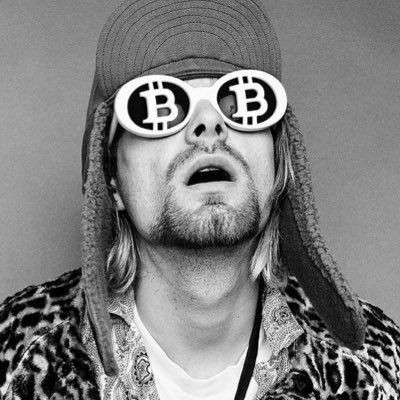 on Cobie · 2544· 4mo ago0
on Cobie · 2544· 4mo ago0“Another 'Everything Exchange' in a Field Already Full of Them”o1.exchange is trying to build what many crypto trading platforms have promised for years: a single terminal where users can trade efficiently, keep custody of their assets, access multiple ecosystems, and eventually manage most of their onchain activity from one place. On paper, it's an attractive vision. Better execution, smart routing, AI-assisted analytics, anti-MEV protection, and self-custody all sound like features traders should want. The problem is that almost everyone is making the same promise. The modern trading terminal market has become one of crypto's most crowded categories. Every platform claims better execution. Every platform claims superior analytics. Every platform claims AI will make trading easier. At some point the differentiator stops being features and starts being habit. Traders don't switch because a dashboard has more buttons. They switch because something is meaningfully better. That's the question o1 hasn't fully answered yet. To its credit, the project isn't operating from a position of zero credibility. Coinbase Ventures and Alliance DAO backing immediately separate it from the endless stream of anonymous trading dashboards that appear every cycle. The team has also been noticeably more transparent than many early-stage projects, putting real names behind the product instead of hiding behind avatars and vague branding. The points system is where things become more complicated. Like much of crypto in 2026, user growth is being encouraged through points, referrals, activity streaks, and gamified reward mechanics. None of that is unusual anymore. The concern is that these systems often measure participation rather than product-market fit. A trader using a platform because it offers better execution is very different from a user clicking buttons because they're hoping for a future airdrop. That's especially true when token expectations start driving behavior. The roulette-style reward mechanics perfectly capture the tension. They help retention, create engagement, and encourage daily activity. They also make it harder to tell whether users are there for the product or the possibility of future rewards. That doesn't make the strategy wrong. It just makes the metrics harder to interpret. Right now, o1 feels like a legitimate project with credible backers, a functioning product, and a serious team operating in an overcrowded market. There are no obvious red flags, but there also isn't a clear reason why it becomes the default destination over the dozens of alternatives chasing the same users. The technology matters. The funding matters. The product matters. But eventually every trading platform has to answer a much simpler question: Why should traders leave what they're already using? Until o1 has a convincing answer to that, it's a promising contender in a crowded race rather than a category winner. on o1.exchange · 1296· 4mo ago · neutral0
on o1.exchange · 1296· 4mo ago · neutral0“The Builder Who Keeps Stepping on His Own Rake”Jesse Pollak deserves more credit than many people give him. Under his leadership, Base evolved from "Coinbase's L2" into one of the most active ecosystems in crypto. The network attracted builders, creators, traders, and everyday users at a scale most chains only talk about. Whether you agree with every decision or not, Base became relevant because people actually showed up and used it. A lot of that traces back to Pollak's vision. Unlike many chain founders who focus exclusively on TVL and token prices, Pollak consistently pushed a broader idea: crypto should be for creators, communities, applications, and culture, not just speculation. The "Base is for everyone" message resonated because it felt bigger than another blockchain growth campaign. The problem is that messaging cuts both ways. Over the last few years, Pollak has repeatedly found himself at the center of controversies that had little to do with infrastructure and everything to do with judgment. Promotional posts, memes, cultural references, and attempts to engage internet culture have sometimes landed very differently than intended. In each case the explanation was usually reasonable, the apology was usually sincere, and the controversy eventually faded. But when the same pattern repeats often enough, people stop viewing it as a one-off mistake. They start viewing it as a habit. That's the challenge Pollak faces today. Nobody seriously questions whether he can build. Nobody seriously questions whether Base has become one of crypto's most important ecosystems. The concern is whether the public face of that ecosystem consistently appreciates how much influence he now carries. When you're running a chain with millions of users, even casual posts stop being casual. Every meme becomes a signal. Every endorsement becomes a headline. Every joke gets interpreted as strategy by someone holding a position. What's interesting is that some of Pollak's strongest moments have come when refusing to play the games many communities demand. His stance against behind-the-scenes market support, token manipulation, and unofficial price intervention remains one of the more principled positions taken by a major ecosystem leader. While others quietly support favored projects, Pollak has repeatedly argued that fair markets require equal treatment. That's not always popular. It's probably correct. Which is why opinions on him remain so divided. Critics see someone who repeatedly creates avoidable controversies. Supporters see a builder trying to humanize crypto and occasionally misjudging how a message will land. Both perspectives contain some truth. Jesse Pollak's biggest achievement wasn't building Base. It was making people care about Base. His biggest challenge is making sure the conversation stays about the infrastructure instead of the latest tweet. on jesse.base.eth · 2085· 4mo ago · neutral0
on jesse.base.eth · 2085· 4mo ago · neutral0“The Chaos Agent Who Actually Does His Homework”Arthur Hayes is one of the few people in crypto who can legitimately claim to have changed the industry itself. Before BitMEX, crypto derivatives were fragmented and primitive. The perpetual swap contract transformed that landscape and became the dominant trading instrument across the entire market. Love him or hate him, a huge portion of modern crypto trading traces back to ideas he helped popularize. That's why people still pay attention when he speaks. Unlike most market commentators, Hayes doesn't just talk about crypto. He talks about liquidity, geopolitics, sovereign debt, monetary policy, energy markets, AI infrastructure, and how all of those forces eventually collide with digital assets. His essays are often uncomfortable because they're willing to explore scenarios that don't fit neatly into the industry's preferred narratives. That's also why they're worth reading. The interesting thing about Hayes is that he's unusually honest about the limitations of forecasting. While many influencers quietly delete bad calls and celebrate every correct prediction, Hayes has openly acknowledged that most market forecasts are wrong more often than they're right. In a space full of certainty merchants, admitting a low hit rate is almost refreshing. The contradiction is that people continue treating his views as predictions anyway. When Hayes writes a macro essay, many readers immediately translate it into a trade. That's often a mistake. His real value isn't the specific target or timeline. It's the framework behind the argument. Even when the conclusion misses, the thought process is usually worth examining. Of course, his credibility isn't spotless. The BitMEX regulatory saga remains part of his story whether supporters like it or not. His guilty plea over AML compliance failures permanently attached a disclaimer to his reputation. Critics see it as proof of a reckless culture that prioritized growth over responsibility. Supporters see it as a relic of crypto's early frontier era being judged by rules that arrived later. Either way, it's impossible to discuss Hayes without acknowledging it. What's interesting is that the experience seems to have made him more nuanced, not less. Unlike many crypto personalities who default to permanent optimism, Hayes is willing to publish genuinely bearish scenarios when he believes conditions warrant them. That's become increasingly rare in an industry where most public figures are financially incentivized to remain bullish at all times. That's why his writing continues to stand out. Arthur Hayes isn't valuable because he predicts the future better than everyone else. He's valuable because he's willing to think through possibilities that most people ignore. Some of those ideas will be wrong. Some will be early. A few will end up shaping how the entire market thinks. That's a far more interesting role than being another influencer pretending to know exactly what happens next. on Arthur Hayes · 1346· 4mo ago · neutral0
on Arthur Hayes · 1346· 4mo ago · neutral0“The Permabull with a Framework, Smart Macro, Dangerous Certainty”Raoul Pal occupies a unique position in crypto. Unlike many of the market commentators who emerged during bull cycles, he arrived with decades of macro experience, institutional credibility, and a framework that extends beyond price charts and social media narratives. His work on global liquidity, debt cycles, and business cycle dynamics has probably influenced more crypto investors than any other macro thinker in the space. That's why his views carry weight. The appeal of Raoul's analysis is that it gives investors a coherent lens through which to understand crypto. While much of CT focuses on halving cycles, influencer narratives, and short-term price action, Pal consistently frames crypto as a liquidity asset. In his view, global liquidity is the master variable, and most market movements eventually trace back to it. Whether you agree with the framework or not, it's far more sophisticated than most market commentary. The challenge is that the framework almost always points in the same direction. Bullish. That's where critics become uncomfortable. Over the years, the timing, targets, and narratives have evolved, but the conclusion rarely changes. Corrections become opportunities. Delays become extensions of the cycle. Weakness becomes future strength. Every obstacle eventually gets absorbed into a broader bullish thesis. That doesn't necessarily mean the framework is wrong. It does mean investors should recognize the incentives and assumptions embedded within it. Raoul is not an observer standing outside the market. He's an active participant with significant exposure to the assets he discusses. That's not unusual, and to his credit he's generally transparent about it. But it does create an important distinction: he's analyzing a market he's deeply invested in, both financially and intellectually. The Banana Zone thesis captures this perfectly. Supporters point to the macro logic behind it and argue that liquidity-driven cycle extensions have largely validated the concept. Critics see a framework flexible enough to absorb almost any outcome while preserving the same bullish conclusion. The debate isn't really about liquidity. It's about falsifiability. What makes Raoul different from many crypto personalities is that he rarely relies on hype. His arguments are usually grounded in data, economic cycles, and long-form reasoning. That's why even people who disagree with him still pay attention. He elevates the conversation. But smart frameworks can create their own risk. When someone is consistently thoughtful, articulate, and often directionally correct, it's easy to stop questioning the assumptions underneath the analysis. That's where conviction turns into dependence. Raoul's greatest strength is his ability to help people understand the bigger picture. His greatest weakness may be that the bigger picture almost always leads to the same destination. Follow the framework. Challenge the conclusion. Because the most persuasive narratives aren't the obviously flawed ones. They're the ones built on enough truth that nobody notices where confidence becomes certainty. on Raoul Pal · 1803· 4mo ago · neutral0
on Raoul Pal · 1803· 4mo ago · neutral0“Encrypted Everything, Delivered Nothing on Time, But the Tech Is Real”Arcium is one of those projects that forces you to separate the technology from the timeline. On the technology side, the case is surprisingly strong. Long before confidential computing became one of crypto's favorite infrastructure narratives, Arcium was building around Multi-Party Computation and Zero-Knowledge cryptography to enable computation on encrypted data. The vision is ambitious but clear: allow applications to process sensitive information without ever exposing the underlying data. If successful, that's infrastructure with implications far beyond crypto. The team deserves credit for one thing many projects never achieve: they've consistently built. The architecture is sophisticated, the research is substantial, and the investor backing reflects that. Serious funds don't usually spend years supporting teams that have nothing to show. The problem is that technology isn't the reason most communities lose confidence. Execution is. Arcium's history feels like a project constantly searching for the perfect moment to arrive. Multiple brand transitions, evolving positioning, and shifting narratives have made it difficult for outsiders to form a stable picture of what the project actually wants to be. Rebranding can signal growth. Rebranding multiple times starts to raise questions about identity. Then there's the launch timeline. Nothing erodes goodwill faster than a community that feels perpetually stuck in the waiting room. The tokenomics were published. The community sale happened. Expectations were set. Yet the launch process repeatedly felt one step away without ever fully crossing the finish line. Every delay may have had legitimate reasons behind it, but delays don't exist in a vacuum. They accumulate. What's interesting is that Arcium has taken a surprisingly principled approach where many projects would have taken the easy route. Instead of running a massive points-farming campaign designed to inflate user numbers and social metrics, the team openly pushed back against the extractive incentive models that dominate crypto. The Retroactive Token Grant approach is one of the few recent distribution models that at least attempts to reward contribution over farming. That's admirable. It's also a gamble. The crypto market is full of users who say they want merit-based systems and then immediately farm the nearest points campaign. Arcium is effectively betting that long-term contributors matter more than short-term mercenaries. Maybe they're right. But principles become much harder to appreciate when timelines keep slipping and expectations keep moving. That's what makes Arcium such a difficult project to evaluate. The technology looks increasingly credible. The philosophy is thoughtful. The infrastructure thesis makes sense. Yet the strongest criticism isn't about the cryptography. It's about trust. Arcium has spent years proving it can build. The next challenge is proving it can deliver on schedule. Because eventually even the best technology has to stop being a promise and become a product. on Arcium · 1633· 4mo ago0
on Arcium · 1633· 4mo ago0